Hawaiʻi’s sunny climate provides reliable solar production year-round, offering homeowners numerous benefits:
Lower electric bills due to reduced reliance on Hawaiian Electric.
Energy independence, especially when paired with battery storage.
Environmental protection, supporting the state’s goal of 100% renewable energy by 2045.
Key Issues Affecting Solar Adoption on Hawaiʻi Island
1. Utility Interconnection and Grid Capacity
Because Hawaiʻi Island operates on an isolated grid, certain circuits—especially in Puna, Kona, and parts of Hilo—are already saturated. This can result in:
Longer approval times
Restrictions on exporting excess power
The need for non-export or battery-based systems
2. Evolving Incentives and Regulations
Hawaiʻi no longer offers traditional net metering. Instead, programs such as:
Customer Self-Supply (CSS)
Customer Grid-Supply Plus (CGS+)
Battery Bonus Programs
shape how systems must be designed. Understanding these options helps homeowners maximize savings.
3. Upfront System Costs
A complete system with battery backup typically costs $20,000–$40,000+, depending on:
Home size
Sun exposure
Battery capacity
Equipment brand
Financing options help reduce the barrier, but costs remain a central issue.
Salt air and humidity can affect hardware longevity
Lava Zones 1 & 2 may influence insurance and financing
Microclimates require customized solar design
The Rising Importance of Battery Storage
Battery storage has quickly become a core component of solar installations. Benefits include:
Backup power during outages
Ability to store energy for nighttime use
Reduced grid reliance
Improved system approvals in restricted circuits
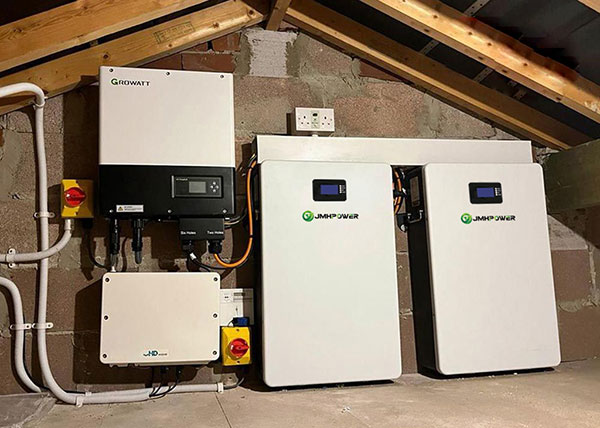
Most new systems on the Big Island now include batteries such as Tesla Powerwall, Enphase, or Generac.
Large-Scale Solar Projects on the Big Island
Hawaiʻi Island continues expanding its renewable infrastructure, including:
Waikoloa Solar + Storage
Keaʻau Solar Farm
Community solar programs in Puna and Kaʻū
These projects contribute substantially to island-wide sustainability goals.
What This Means for Homeowners
For property owners on Hawaiʻi Island, solar energy offers:
Lower monthly electricity costs
More control during outages
Increased property value
Long-term stability despite rising utility rates
Solar is especially appealing for off-grid homes, agricultural properties, and remote parcels.
Conclusion: A Bright Future with Informed Choices
Solar energy is an essential part of Hawaiʻi Island’s future. Understanding system types, regulations, and local conditions allows homeowners to make wise, cost-effective decisions.
If you’d like a free solar or property market analysis, or guidance tailored to your lot or home, I’m happy to help.
I have been thinking about upcoming changes to the law regarding vacation rentals, and wanting to write about what is going on.
I have been hearing about this new artificial intelligence program called ChatGPT. It can write essays that are very convincing. High school and college students are already using it to write their papers for school.
I thought, hey, what about me? It would sure save me a lot of time and effort. So, this is what I did. I created an account at ChatGPT. Then I went to ChatGPT+ and put in this request;
Write a 100 word essay on upcoming changes to regulations regarding vacation rental operations in the Puna District.
This is what I got back:
“Vacation rental operations in the Puna District of Hawaii are set to undergo some drastic changes. With the growth of the area’s tourism industry, state regulations have started to crack down on property owners who rent out their properties on a short-term or vacation basis.
Hawaii’s Department of Business, Economic Development and Tourism recently announced they are launching a Mandatory Vacation Rental Registry, which would allow the state to accurately track rental properties and their operations. The goal of this registry is to ensure that local regulations for vacation rentals are properly enforced. This will be mandatory for any property owner who wishes to continue to rent their property on a short-term basis.
In addition, the state has issued several new regulations on these properties. These regulations include additional restrictions on unhosted and nonresidential vacation rentals, such as a two-week limit for multiple bookings, and increased penalties for failure to comply. These changes are intended to increase accountability and provide stronger government oversight of vacation rental operations in the Puna District.
Overall, it is clear that the upcoming changes to regulations regarding vacation rental operations in the Puna District will have a significant effect on property owners. It is important that they are familiar with the new laws and regulations and comply accordingly. Failure to do so will result in severe punishments, including hefty fines and possible jail time.”
I love it. I am not sure about the “possible jail time”, but for the most part, I wouldn’t change a word. Also, it is more the county that is cracking down on vacation rentals, not the state.
I do want to add some things, though.
This bill was introduced by Ashley Kierkiewicz and Heather Kimball. I really don’t like the proposed changes, and wondered why they introduced this bill. Ashley is our representative here in Puna. I decided to ask her why she is sponsoring these changes. This is what I sent to her
“Ashley, I am writing an article about the proposed changes to vacation rental regulations. I wondered why you are introducing this legislation?
I see it having a very negative impact on many senior citizens living in Puna. Many retirees depend on vacation rental income to supplement their social security and give them a hedge against inflation. I would like to include your response.
By the way, thank you for your support of our HPP Land Use Committee. Aloha”
Non-hosted vacation rentals are already required to be licensed, and the county has said that they will not issue any new licenses in Puna for non-hosted short term rentals. The changes that they are proposing would extend that regulation to hosted rentals. Every hosted rental would be require to register with the county, and the county would be setting limits as to how many people will be able to offer hosted rentals. There would also be new regulations
This is a quote from an article in Honolulu Civil Beat;
“If the bill is ultimately adopted, transient rental operators would have to pay an initial registration fee and an annual renewal fee and comply with a host of rules. Some of the rules relate to on-site parking, the submission of site and floor plans, contact information for all registered property owners and managers, notification to surrounding properties and more.
Failure to do so could result in $10,000 in fines.
The bill would set a guest limit of no more than two adults per bedroom and an additional two adults for the unit as a whole. Individuals could operate no more than one transient accommodation rental, besides their principal home, unless they’re a licensed realtor.
Commercial weddings, wedding receptions or events would be prohibited unless operators get special permits.”
Hosted rentals are not currently regulated. You don’t need a license. Hosted means that the owner or a manager lives on the rental property. It’s a good deal. Your kids are off to college, probably never to return to live. You can rent out their rooms for short term rentals. At $50 to $100 per night, that could make a significant impact for retirees living on a fixed income. The recent inflation has already created hardships for a lot of our neighbors. Do we really need or want the county to be stepping in to regulate and limit this source of income?
To be fair, they are addressing some real issues. There is a shortage of available rentals in Puna. They want to manage this economic issue by restricting what people can or can’t do. By limiting vacation rentals, they are, in theory, making more rentals available to local people. There is some logic to that. If I could not offer vacation rentals, I would probably offer long term rentals, if I needed some additional income.
The other issue is the increase in noise and traffic associated with vacation rentals. The sponsors of this bill say they are trying to protect the quality of life for those living in the neighborhoods of these short term rentals. I haven’t seen any direct evidence of these problems, but I have heard stories.
I guess it comes down to costs and benefits. I am sure the sponsors of this bill are looking out for the welfare of their constituents, but things don’t always turn out as intended.
What I see is a further intrusion of the government into our daily lives, more government fees and red tape for those wanting to offer hosted vacation rentals. I am not saying they are totally wrong. There are problems. We do have outside investors buying up properties to operate as vacation rentals. I would like to see that reduced. It does reduce the amount of available housing, and doesn’t provide income to people living here.
It is a complex issue. We need to understand the costs and benefits associated with this proposed legislation. We also need to speak up and let our county representatives know how we feel, whether we support this legislation or not.
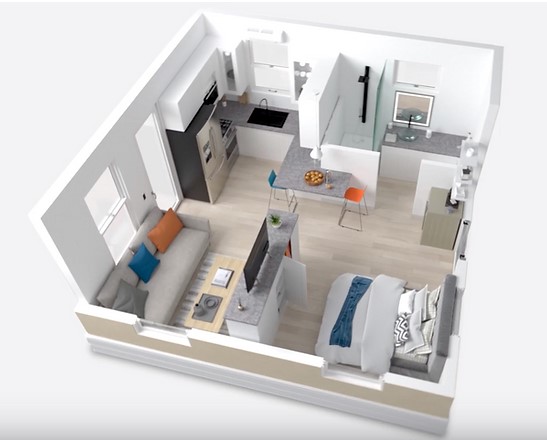
I have an idea. I want to set up a tiny home on a piece of land, and sell it
I’ve decided to share this process with all of you. It is too much to put into one post, so this will be a series of post as I go through the process.
This how it breaks down
Buying a lot
Prepping the lot
Permit Application
Buying a Boxabl tiny home
Getting it installed
It is going to take some research. I want to figure out how much will it cost to have a permitted home with water, sewer, and electricity connected and installed.
The first article will be about buying and prepping the land here in Puna on the Big Island.
This is a YouTube video that talks about Boxabl and their second factory that will be coming online very soon